


Comparing the competition
- gourmetvanillaspic
- Jan 13
- 4 min read
Don't get me wrong, there are some very high-standard Vanilla extracts on the market. I've worked hard to at least match their standards. I follow FDA standards. I've researched what the best is, including the alcohols to use. What puzzles me is why people choose what they do. We are a society moving toward Organic, non-GMO, Gluten-Free, Pure, and higher standards. Yet, we're not educating ourselves in the process. I saw bottled water labeled Gluten-Free. Do we understand that Gluten is a part of Wheat, and there is no wheat in water? So why the need to label it gluten-free? And we seem to accept the "old familiar" because grandma and mom used it, must be good. They also used margarine and lard to cook, and never heard of terms like non-GMO, gluten-free, or even organic. They bought what was available at the local grocery store.
So let's explore some of those easily acceptable grocery store items. For example, Watkins Vanilla. I was looking at a display, and the very same vanilla, size, everything, side by side, and one was labeled Gluten-Free at a $10 higher price than the other. ALL vanilla is gluten-free. Even if an alcohol contains traces of gluten, the many steps of distillation remove it.
Grain alcohol is generally considered gluten-free. This is because distilled alcohol, even if made from gluten-containing grains like wheat, rye, or barley, undergoes a process that removes gluten proteins. According to the FDA, distilled foods and spirits made from gluten-containing grains can be labeled as gluten-free.
So, why the deceptive marketing? Just to get that extra $10 from the consumer who's not aware. So, another point with Watkins, "All Natural" ... "Pure Vanilla ... with other natural flavors."

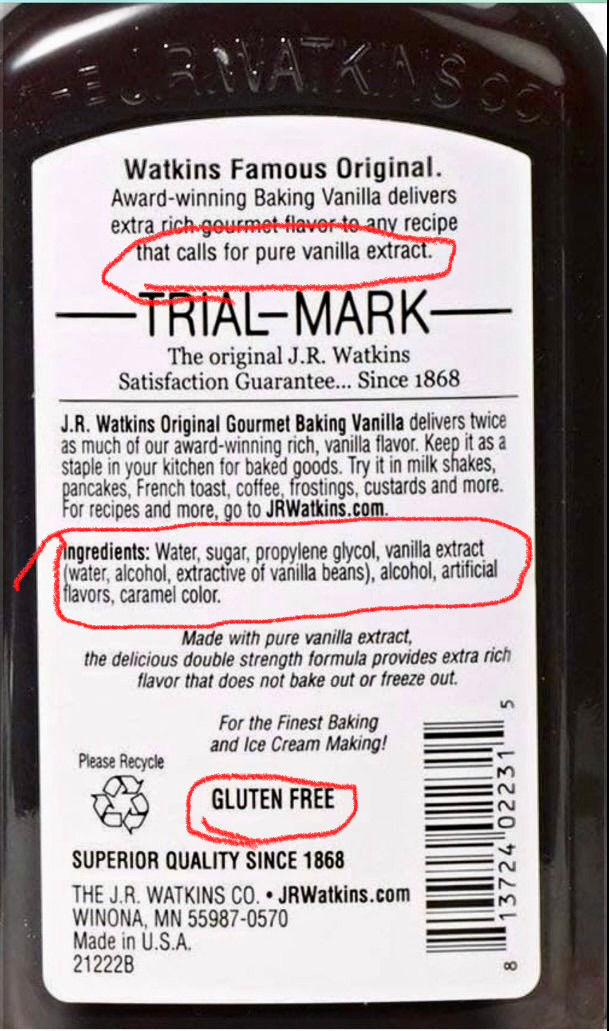
Other ingredients include "water, sugar, propylene glycol, vanilla extract, alcohol, artificial flavors, and caramel color." So, it's not really Pure Vanilla. We never add anything artificial, no sweeteners, no colors, and certainly not propylene glycol.
Some questions often asked (taken from a supplier of vanilla beans)
Do You Remove Vanilla Beans After Making Extract?
The decision to remove or keep vanilla beans from the extract is a matter of personal preference, not dictated by FDA guidelines. While some individuals prefer to leave the beans in the extract to continue infusing over time, others may remove them after the initial steeping process. Generally, we recommend removing and filtering your vanilla extract. Doing so will help your extract have a nice, clear, dark brown to amber color and avoid cloudiness from the vanilla bean matter that is floating around.
Is it okay to reuse your vanilla beans when making vanilla extract?
No, it is not okay to reuse already spent vanilla beans. This is illegal if you try to sell vanilla extract made from spent vanilla beans. You will still be able to smell vanillin from spent vanilla beans, but that does not mean you will get quality vanilla extract from them. It is always recommended to use new vanilla beans when making a fresh batch of vanilla extract at home or for resell to consumers.
Here is some additional information about another popular store brand, McCormick. There are other very good, high-quality, pure vanilla products on the market. And they are higher priced than Gourmet Vanilla 'n Spice. We attempt to keep our prices reasonable for the average home baker. We aim to educate about Vanilla and its additional uses beyond adding it to your baked goods. The cost of vanilla extract is based on the price of vanilla beans, which average $10-$60/ounce. We are a Better Business Bureau-accredited company. We've been making only quality vanilla for 6 years, never adding anything artificial, color, sweeteners, or additives. Just pure vanilla extract. When the quality of your ingredients matters, it should also matter what flavoring you use. Vanilla beans are the 2nd-most-expensive spice after saffron.
Another point to be made about those low-priced, large bottles of vanilla you buy when visiting Mexico.
FDA Warns of Dangers of Mexican Vanilla
ByABC News
October 31, 2008, 2:02 PM
Nov. 1 -- FRIDAY, Oct. 31 (HealthDay News) -- So-called Mexican "vanilla" is often made with a toxic substance called coumarin and shouldn't be bought by consumers, the U.S. Food and Drug Administration warned this week.
Coumarin is related to warfarin, which is found in some blood thinners. Eating foods with coumarin may be dangerous for people taking blood thinners, because the combination could increase their risk of bleeding.
Mexican vanilla -- which may smell and taste like real vanilla and is cheaper than the real thing -- is sold in Mexico and other Latin American countries and has started appearing in some U.S. stores and restaurants, the FDA said.
Pure vanilla is made from the extract of vanilla beans. Mexican vanilla is often made from the extract of tonka beans, an entirely different plant belonging to the pea family. Tonka bean extract contains coumarin. Since 1954, coumarin has been banned from all food products sold in the United States.
Consumers should be cautious when buying vanilla in Mexico and other Latin American countries, the FDA advised. Look for "vanilla bean" on the label's ingredient list. Don't buy the product if it says "tonka bean" or has a vague ingredient list or no list.

Avoid extracts marked “imitation vanilla.” These are chemically produced from synthetic vanillin and can leave a bitter taste in your recipes. Pure vanilla extract, while more expensive, is always best.


Comments